When you support Kansas City University, you ensure that our mission is carried out in the following key areas:
Improving the Well-Being of Communities We Serve
At KCU, we are committed to improving the well-being of every community we serve. Through initiatives like Score 1 for Health, KCU addresses immediate health care concerns, fosters long-term community health, and creates the inspired, patient-centered health care leaders of tomorrow. Each year, Score 1 for Health provides free, in-school health screenings for more than 11,000 elementary-aged students in Kansas City and Joplin, addressing some of the most crucial barriers to care that families and communities face. KCU students provide the screenings under supervision, learning to combine connecting with their patients and providing essential care. Supporters like you make special KCU projects, such as Score 1 for Health, possible, building healthier families, stronger communities, and a brighter future for all. Learn more about this initiative in the video.
Student-Centered Education
Students are at the center of everything we do. As a KCU supporter, you help make our unique, student-centered approach possible and help bring about a new generation of leaders who will change health care for good. Your support helps sustain our welcoming, student-centered community and ensures KCU students have access to every possible tool for success and learning. Dr. Darwin Strickland, inspired by gratitude for the life-changing scholarship he received from the American Osteopathic Association to achieve his DO, is giving back by supporting KCU students on their journey. In the video, learn more about one of our 30+ endowment scholarships that will help allow even more students to answer the call of their dreams.
Changing Health Care for Good
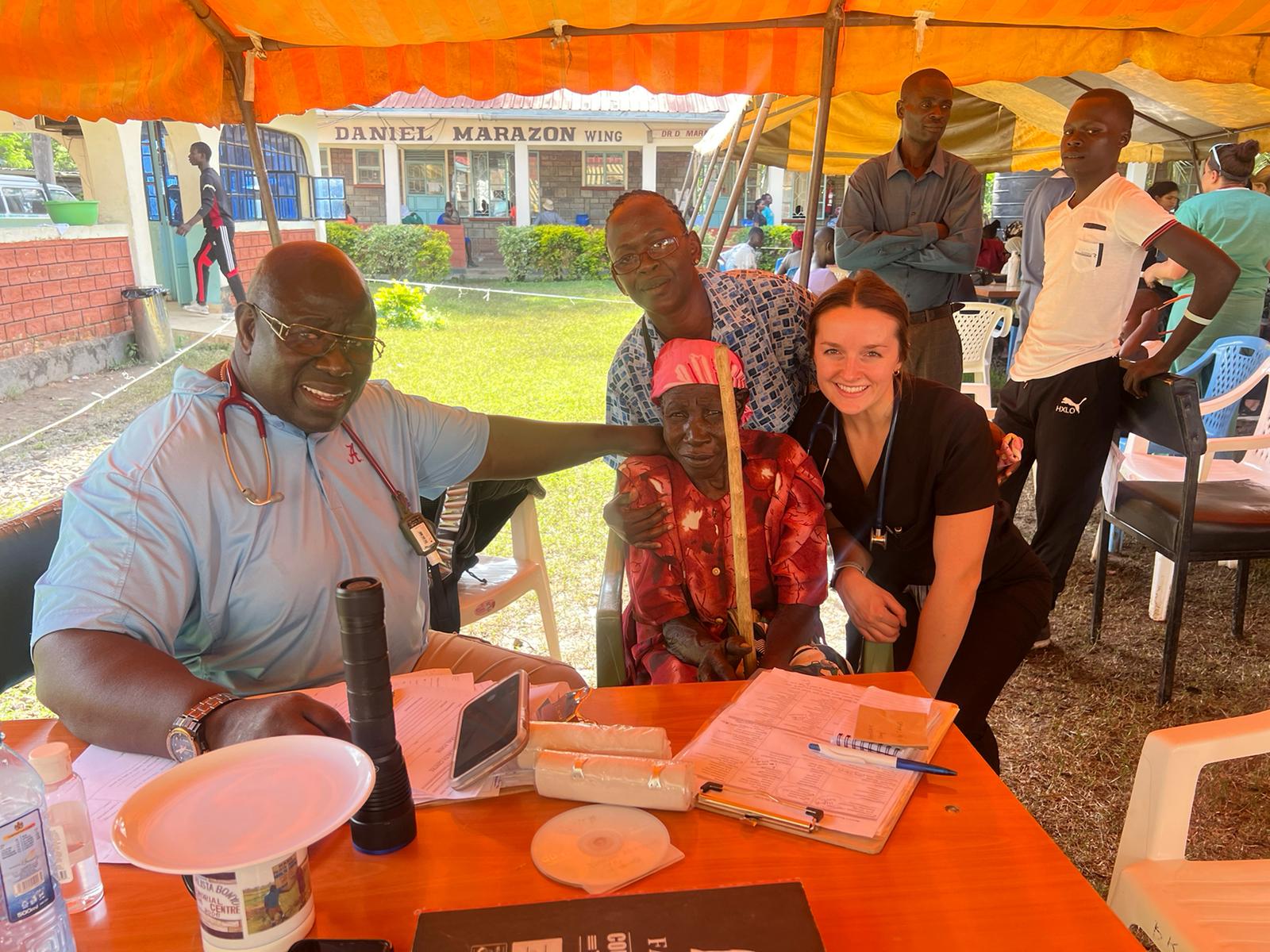
You help KCU change the future of health care through a patient-centered approach. Our commitment to student-centered education fosters health care leaders who prioritize patients at the center of everything they do. One KCU graduate, Megan Ottomeyer, DO (COM 2017), learned to consider every aspect of the human in front of her when KCU’s Global Health Track took her to Kenya and changed her life. On her first trip, a formative experience delivering a baby set her on track to become a neonatologist, and she was so inspired that she has continued making the trip annually—now as a KCU faculty member—and to sponsor one KCU student’s trip each year. Through her experiences in Kenya, Dr. Ottomyer learned to consider everything that goes into taking care of the whole person, to recognize an individual’s unique needs and challenges, and to connect meaningfully with her patients. By helping make opportunities like this possible, your partnership with KCU helps change the future of health care.
Read Her Story Here
Megan Ottomeyer, DO, a neonatologist and assistant professor of pediatrics at SSM Health Cardinal Glennon Children’s Hospital in St. Louis, Missouri, did not go into medical school at Kansas City University (KCU), or even into her residency, thinking she’d end up working with the tiniest of patients.
Instead, she thought she’d end up in emergency medicine, hematology-oncology, or one of many different pediatric specialties. It wasn’t until she joined KCU’s Global Health Track program on a trip to Kenya that she changed her career trajectory—and her life.
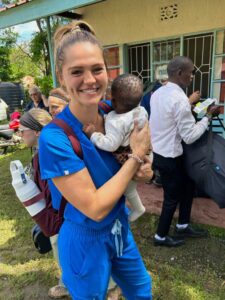 While in Kenya, Ottomeyer was called in and asked if she’d like to help a midwife and nurse deliver a baby. Being part of the delivery and caring for the newborn after he was born was an amazing experience, she said.
“The mom asked me to name the baby the next day,” Ottomeyer said. “I named him Anderson, after the OB who taught me how to catch babies. I was on a high all day from it. Later, I became a neonatologist, and my path should have been clear, considering how excited I was helping deliver that baby. It all came full circle.”
Bonyo’s Kenya Mission
Since 2006, KCU has teamed up with Bonyo’s Kenya Mission and Bonyo Bonyo, DO, KCU adjunct professor, to help provide medical treatment to patients living in the village of Wanjaya, where Bonyo was born and raised, and surrounding communities. Twice a year, KCU students and volunteers travel to Wanjaya to work in the 6,000-square-foot Mama Pilista Bonyo Health Centre, named in memory of Bonyo’s mother, to provide medical services, resources, and other forms of assistance to the people in the village.
In November 2015, during her third year of medical school, Ottomeyer made her first three-week trip to Kenya. Not thinking of herself as a global health person, and as someone who gets homesick easily, she was hesitant to apply. The cost was also a deterrent, and she worried that she wouldn’t be able to afford it. However, through donations from friends and family on a GoFundMe page, she was able to raise enough money to make the trip.
“I thought I’d try it once and maybe I’d end up loving it, maybe not,” Ottomeyer said. “I loved it. Like, really loved it.”
She was hooked. In her fourth year, she rearranged her schedule to make the trip an elective. As the only fourth-year student on the trip, she also had to reschedule her residency interviews to coincide with her dates in Kenya. Again, she loved the experience.
Once she became a resident at Cardinal Glennon, which didn’t have a partnership with the site in Kenya. With no board-certified pediatrician there, she was unable to make the trip to Kenya a rotation for herself. Instead, she ended up taking the trip as a research elective, marking her third visit to Bonyo’s Kenya Mission.
That year, it became a family affair, as Ottomeyer’s mother joined her on the trip. While not in medicine, she was very useful, reading to the kids in the village, learning how to do some intake and take vitals.
“That was really special, having my mom there with me,” Ottomeyer said.
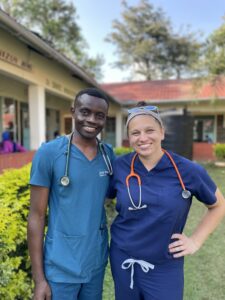 Throughout the remainder of her residency and fellowship, Ottomeyer wasn’t able to make another trip to Kenya. Her schedule just didn’t allow for it. Keeping in touch with the program, however, led her to a last-minute opening in 2023. She rearranged her schedule and was able to make it happen.
“I think just how much I learned in such a short amount of time is what kept me going back,” she said. “You start to figure things out in your third year of medical school, and you’re ripe for all types of learning because you know just enough to be dangerous.”
Absorbing all the information and learning to focus on a good physical exam and patient history rather than relying on lots of labs or imagery due to limited resources makes the experience memorable and worthwhile.
“We learn just as much from the Kenyan group as they learn from us,” Ottomeyer said.
The need in Kenya is high, with sick children and people who are ill or in pain. Ottomeyer said she liked being able to fill that need.
“We are guests there and it’s really humbling, but it’s also empowering because people are so nice there and want you there,” she said. “It’s such a homey and friendly environment.”
Day-to-day in Kenya, on weekdays, Ottomeyer and KCU’s team would head to the clinic. Upon their arrival, many people will be waiting to be seen. The team would see patients throughout the day, with the help of high school students from the village, who were on break from school and served as interpreters.
In addition, the full-time Kenyan clinical officers on staff are vital to the success of treating patients, Ottomeyer added.
“We’re not familiar with things like malaria or typhoid, but to them, managing those conditions is easy,” she said. “They also have experience in knowing how to stretch resources appropriately or allocate them when resources are scarce, and teach us so much about how medicine is practiced in their country.”
Dealing with chronic problems that some patients have had for years, acute illnesses, medication distribution, wound care, rapid malaria testing, the clinic and its lab, Ottomeyer said, are pretty bare-bones, teaching students to make do with the supplies they have on hand.
Big on hospitality, when breaking for lunch, the ladies in the village make chapati, which is like flatbread, and tea. Each day is different, though, depending on the patients seen.
As a neonatologist, Ottomeyer handles high-risk deliveries and cares for infants, but enjoys stretching her pediatric skills by seeing the children in Kenya. In December, she traveled to Kenya as a faculty member, where KCU students would develop a treatment plan, and she’d be able to conduct some teaching on the spot. There were a few baby deliveries, too, and she was able to share what she would do if an infant were in respiratory distress or experiencing other complications.
The wide array of pathologies seen during clinic days really helps to keep Ottomeyer’s general pediatrics skills sharp, she said. In one day, she went from troubleshooting breastfeeding with the mother of a
newborn, to admitting a school-age child for typhoid and dehydration, to diagnosing eczema, and to helping the clinical officers respond to and manage a 10-year-old who started seizing due to cerebral malaria.
“It was a lot more fun as a faculty member because I was able to focus on the kids, and they’re really the only ones I should be seeing,” Ottomeyer said. “I really enjoyed the teaching aspects of returning as a faculty member, and I’ve become passionate about medical education throughout my training. Being able to teach students in such a good learning environment was very rewarding.”
Future Scholarship
She’d like to continue making the trip on an annual basis. Because these trips can be cost-prohibitive, Ottomeyer feels they shouldn’t be reserved for only those students who have the means. Going forward, she is also committed to sponsoring a KCU student to attend each year.
“I would hate to think that someone wouldn’t be able to have the experience that I did, one that has been so formative, just because they didn’t have the cash right away,” she said. “I’m excited just to think that one more person’s going to be able to enjoy this and not worry about the cost.”
The Kenya trips have not only transformed her as a person, but also in the way she treats her patients. It can sometimes be difficult to connect with patients who may look different or be from someplace else, she said.
“I have a new appreciation for people who feel foreign in an environment, and I feel like that cognizance helps me reach out to those people and make them feel comfortable,” Ottomeyer said. “I have been the person who doesn’t speak the language of the majority, or the one who stands out and looks very different, or who doesn’t understand the customs. There’s nothing wrong with that; it’s just different, and I feel like I can recognize those challenges in patients because I’ve been in a similar situation.”
She now has a better appreciation for all that goes into taking care of the whole person, including her approach to medical problems influenced by factors unrelated to their health, such as transportation, access to clean drinking water, and whether they live in a rural village or close to the city. Having been stripped of resources, Ottomeyer said she’s more aware of global health practices because of her experiences in Kenya.
“It’s a special privilege to do this and not something I take for granted,” she said.
Become a Friend of KCU
Do you want to receive exclusive email updates directly from KCU?
Get direct and instant access to a member of our team, who will share information about your impact, project outcomes and stories from the field.